
Body Adiposity Index Calculator
Body adiposity index (BAI) has gained attention in recent years as an additional metric to body mass index (BMI) and body fat percentage. While body composition and anthropometric numbers are useful to compare over time, I think it's important to also provide a bit of context so you can interpret the numbers appropriately. Therefore, the purpose of this BAI calculator and the following article is to take a closer look at BAI, what it is, how it differs from other measures, and what it can reveal about your health.

What is body adiposity index?
The Body Adiposity Index (BAI) is a relatively new method created by Bergman and colleagues in 2011 for estimating body fat percentage without the need for numerical correction factors for gender or ethnicity. It was developed from a population study which used dual-energy X-ray absorptiometry (DEXA), considered the gold standard for body composition.
Unlike body mass index, which uses height and weight, BAI is calculated using hip circumference and height measurements. While BAI can be used in a clinical setting, it is particularly useful because it does not require expensive equipment.
How to calculate BAI
BAI formula = ((Hip circumference in cm) / (Height in m)^1.5) - 18
Confused? Don't worry. Here's how to use it. Let’s say your hips are 100 cm hips at 1.75 m in height:
BAI norm values for men and women
Once you have your BAI value, you can interpret it using the following guidelines:
| Age | Gender | Underweight | Healthy | Overweight | Obese |
|---|---|---|---|---|---|
| 20 – 39 | Female | < 21% | 21 – 33% | 33 – 39% | > 39% |
| 20 – 39 | Male | < 8% | 8 – 21% | 21 – 26% | > 26% |
| 40 – 59 | Female | < 23% | 23 – 35% | 35 – 41% | > 41% |
| 40 – 59 | Male | < 11% | 11 – 23% | 23 – 29% | > 29% |
| 60 – 79 | Female | < 25% | 25 – 38% | 38 – 43% | > 43% |
| 60 – 79 | Male | < 13% | 13 – 25% | 25 – 31% | > 31% |
How is BAI different from BMI and body fat percentage?
Body mass index
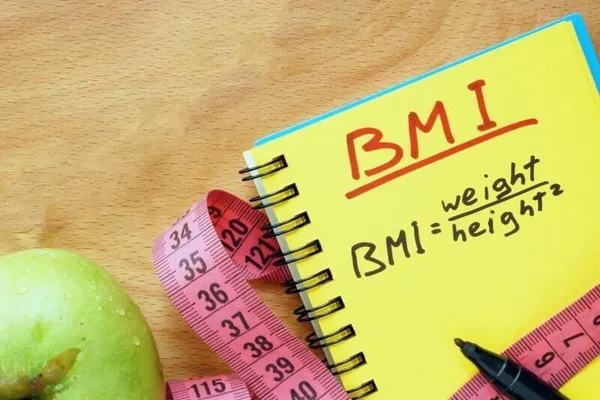
Body mass index (BMI) is a popular metric that calculates your weight in relation to your height. It's a simple and convenient way to estimate whether you're underweight, overweight, or obese. However, BMI has its limitations as it does not distinguish between muscle mass and fat mass, which can lead to misclassifications, particularly for athletes or those with a high muscle-to-fat ratio.
Check out my fat mass index article for a more viable alternative to BMI.
Body fat percentage
Body fat percentage is a more direct measure of your body composition. It's typically calculated using advanced techniques like dual-energy X-ray absorptiometry (DEXA), hydrostatic weighing, or bioelectrical impedance analysis (BIA). While these methods are comparatively more accurate than BMI, they can be expensive, time-consuming, and may not be readily available.
Body adiposity index
BAI offers a unique approach to estimating body fat percentage using just two simple measurements: hip circumference and height. Unlike BMI, BAI takes into account the distribution of body fat, which is often concentrated around the hips and abdominal area. Additionally, BAI has been found to be a better predictor of body fat percentage than BMI, particularly for non-athletic populations.
What can BAI tell me about my health?
Your BAI can provide insights into your overall health and potential risk factors. Here are some key points to consider:
- Obesity and obesity-related diseases: A high BAI indicates an increased risk of obesity-related conditions such as type 2 diabetes, heart disease, stroke, and certain types of cancer. Maintaining a healthy BAI can help reduce these risks.
- Cardiovascular health: Research has shown that a higher BAI is associated with an increased risk of cardiovascular diseases, including hypertension and metabolic syndrome.
- Metabolic health: Excess body fat, especially around the abdominal area, can contribute to insulin resistance, dyslipidemia (abnormal levels of lipids in the blood), and other metabolic disorders.
- Joint and musculoskeletal issues: Excess body weight can put additional stress on your joints and worsen conditions like osteoarthritis and chronic pain.
It's important to note that while BAI can provide valuable insights, it should not be used as a sole determinant of health. Other factors, such as your diet, physical activity, genetics, and lifestyle contribute to your overall health.
Also be aware that a number of peer-reviewed articles have shown that BAI has limitations and may not be superior to other forms of body composition assessment.
Take home message
Body Adiposity Index (BAI) should be considered an additional tool for estimating body fat percentage and assessing potential health risks. While it has some advantages over BMI, it's important to remember that it's just one indicator of your overall health. BAI has its limitations but can be useful in helping you to make positive lifestyle changes towards achieving a healthier and more balanced body composition.
